
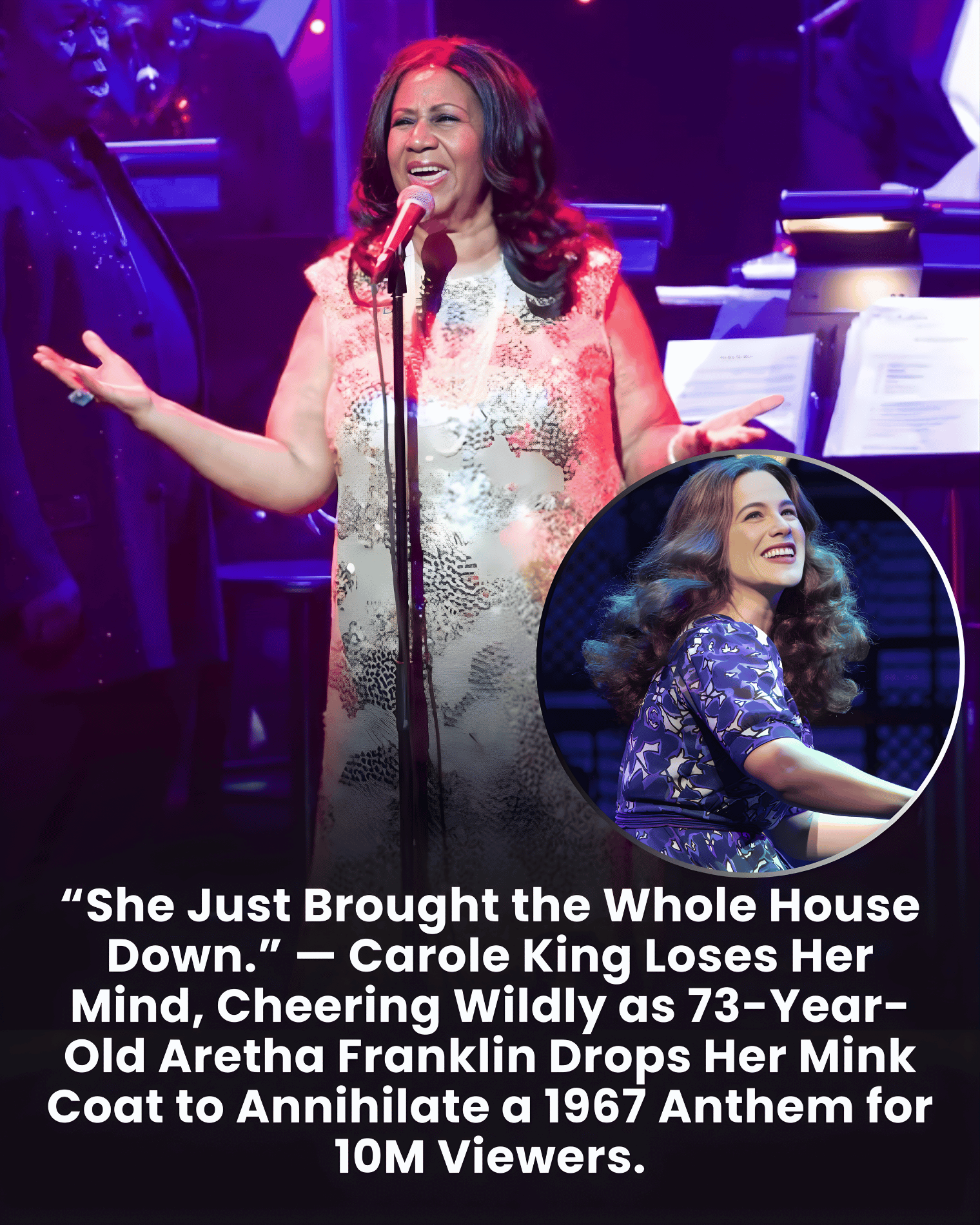
One of the most unforgettable moments in modern music history unfolded during the Kennedy Center Honors in 2015. The prestigious event, held at the John F. Kennedy Center for the Performing Arts, was celebrating the remarkable legacy of Carole King. Throughout the evening, artists gathered to honor the legendary songwriter whose music had shaped generations of listeners. But no one in the audience could have predicted the breathtaking performance that would soon unfold.
As the program continued, a figure quietly walked onto the stage: Aretha Franklin, the iconic "Queen of Soul." At 73 years old, Franklin carried decades of musical greatness behind her, yet the room still buzzed with anticipation as she approached the piano. Draped in a glamorous full-length fur coat, she sat down calmly before beginning one of the most beloved songs in Carole King's catalog—"(You Make Me Feel Like) A Natural Woman."
The moment the first notes echoed through the theater, the atmosphere shifted. The audience immediately sensed they were witnessing something extraordinary. Franklin's voice, rich with power and emotion, filled the hall with the kind of commanding presence that had defined her career for decades.
For Carole King, sitting in the audience as the evening's honoree, the performance was both surprising and deeply personal. She had written the song decades earlier, and hearing it performed by the artist who had transformed it into a soul classic was already overwhelming. As Franklin's voice soared through the verses, King's expression reportedly shifted from delight to pure astonishment.
Then came the moment that would become instantly iconic.
Midway through the performance, Franklin rose slowly from the piano bench. With deliberate flair, she shrugged off her luxurious mink coat and let it fall dramatically to the stage floor. The gesture electrified the crowd. What had already been a powerful tribute suddenly became a declaration of musical dominance.
As the music built toward its climax, Franklin unleashed a series of towering high notes, delivering the song with extraordinary intensity. Her voice carried both strength and vulnerability, transforming the familiar melody into something almost spiritual. The audience erupted with cheers, unable to contain their excitement.
Among those visibly moved was Barack Obama, who was seated in the audience alongside other dignitaries. Cameras captured the president wiping away tears as Franklin's voice filled the room—a powerful reminder of how deeply music can resonate across generations and backgrounds.
Carole King herself appeared overwhelmed with emotion, cheering and applauding enthusiastically as the performance reached its final moments. For a songwriter, hearing one's work interpreted at such a profound level is a rare and unforgettable experience. Franklin's performance seemed to capture the very soul of the song, honoring King's writing while elevating it into an extraordinary live moment.
When the final note faded, the entire hall erupted into a standing ovation. The tribute had become something more than a simple performance—it was a demonstration of why Aretha Franklin remained one of the most revered voices in music history.
Broadcast to millions of viewers watching at home, the moment quickly became one of the most celebrated performances ever featured at the Kennedy Center Honors. Long after the applause ended, the image of Aretha Franklin standing proudly on stage, coat cast aside and voice soaring, remained etched in the memories of everyone who witnessed it.
It was more than a tribute. It was a reminder that true musical greatness does not fade with time. Even after decades of success, Aretha Franklin could still walk onto a stage and remind the world exactly why she was—and will always be—the Queen of Soul.