
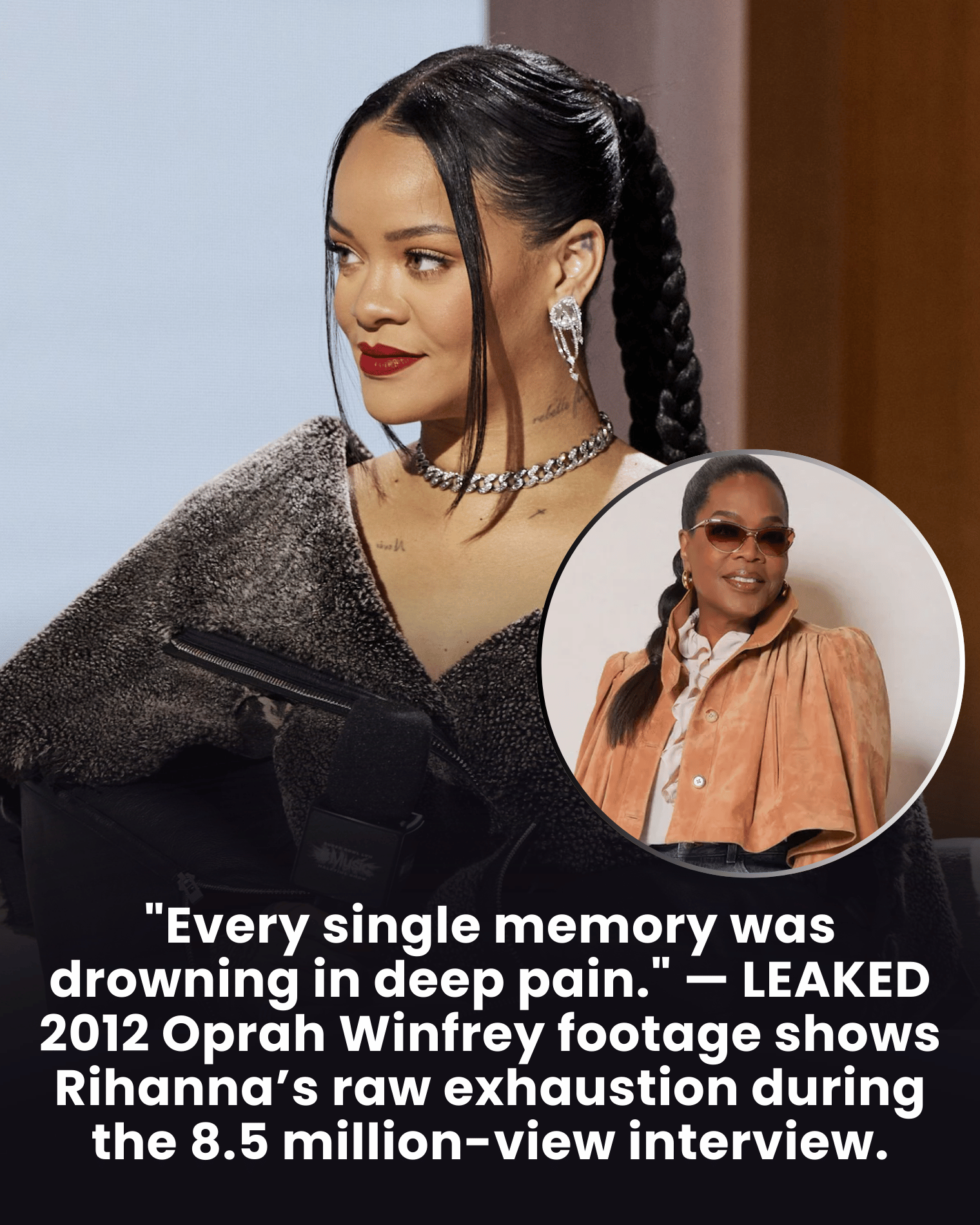
In 2012, global pop icon Rihanna sat down with legendary television host Oprah Winfrey for an intimate episode of the talk series Oprah's Next Chapter. Filmed at Rihanna's home in Barbados, the interview quickly became one of the most widely discussed celebrity conversations of the decade. Watched by millions and later circulating widely online, the discussion offered a rare glimpse into the emotional weight the singer still carried years after one of the most difficult chapters of her life.
The setting itself felt deliberately personal. Instead of a brightly lit television studio, the interview took place on a quiet veranda overlooking the Caribbean landscape. The relaxed environment was meant to create a sense of comfort, but the conversation soon moved into deeply sensitive territory. Oprah, known for her probing yet empathetic interview style, asked Rihanna to reflect on the trauma she experienced in 2009, a moment that had dominated global headlines and dramatically altered the course of her public life.
As the subject surfaced, Rihanna's body language shifted immediately. Observers later noted how she curled inward, drawing her knees close and wrapping her arms around them as if trying to shield herself. The confident performer who commanded stadium stages suddenly appeared small and vulnerable. Her voice softened, and long pauses began to punctuate her answers.
At several points, the emotion became overwhelming. Rihanna struggled to maintain composure as she spoke about the complicated mixture of pain, confusion, and lingering empathy she felt toward the person involved in that traumatic chapter of her life. She blinked rapidly, fighting back tears, and briefly turned away from the camera as she wiped at her eyes. The moment revealed how deeply those experiences still resonated beneath the surface of her carefully maintained public image.
For Oprah, who had conducted thousands of interviews throughout her career, the exchange carried an unusual weight. The host allowed extended silences to remain in the conversation rather than immediately filling them with new questions. Those pauses became some of the most powerful moments of the interview, giving viewers time to absorb the intensity of what Rihanna was trying to express.
One of the most striking elements of the conversation was Rihanna's honesty about her conflicting emotions. She did not present her feelings in simple terms of anger or closure. Instead, she spoke about the complexity of healing and the unexpected compassion she still felt, even while acknowledging the pain the situation had caused. That raw honesty challenged many viewers' expectations of how a survivor might publicly discuss such experiences.
The interview ultimately resonated far beyond celebrity gossip. For many viewers, it became an important conversation about vulnerability, recovery, and the long process of emotional healing. Rihanna's willingness to confront those memories in such a public setting allowed audiences to see a side of her rarely visible in music videos or stage performances.
More than a decade later, the interview remains one of the defining moments of Rihanna's public narrative. It captured a global superstar not in the spotlight of fame, but in a quiet moment of reflection—speaking candidly about pain, resilience, and the complicated path toward moving forward.