
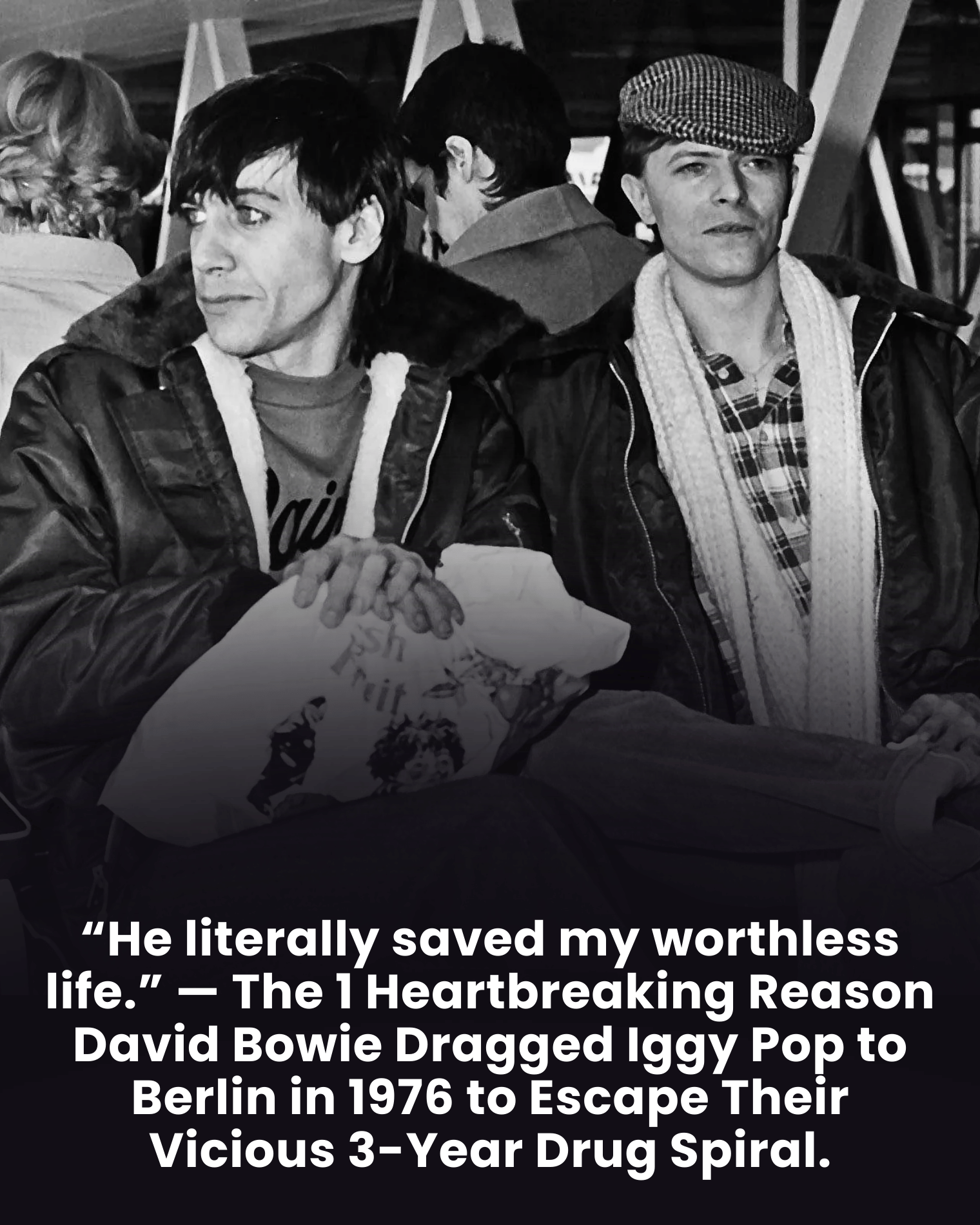
In the mythology of rock music, few friendships were as chaotic, combustible, and ultimately life-saving as the one between David Bowie and Iggy Pop. By 1976, both men were teetering on the edge of collapse, but it was Bowie who made the decisive move that may have kept Iggy alive. Long before Berlin became shorthand for artistic reinvention, it was a desperate refuge for two damaged stars trying to outrun the destruction they had fueled together.
At that point, Iggy Pop was in terrifying condition. The former Stooges frontman had spent years spiraling through addiction, sinking deeper into physical and emotional ruin. The image is heartbreaking: Iggy, frail and freezing, sitting on a dirty mattress in a Los Angeles bungalow, barely resembling the dangerous, shirtless force who had once defined punk before punk even had a name. His body was failing him, his career had stalled, and the chaos around him had become his entire existence.
Then Bowie appeared.
He was hardly a picture of health himself. Thin to the point of alarm and battling his own demons, Bowie nonetheless saw the situation with startling clarity. According to the legend that has endured for decades, he did not arrive with platitudes or gentle persuasion. He came with urgency. He grabbed Iggy, physically and emotionally, and made the decision for both of them: they were leaving. Berlin was the destination, but survival was the real goal.
That move would become one of the most significant acts of friendship in rock history.
Berlin in the late 1970s offered something Los Angeles no longer could: distance, anonymity, and the possibility of rebuilding from the ground up. It was cold, bleak, and far from glamorous, but that was part of its appeal. Removed from the excess and decay of the American music scene, Bowie and Iggy were forced into a different rhythm of life. They could breathe there. They could work there. Most importantly, they could try to live there.
The creative results were extraordinary. In Berlin, Bowie helped produce The Idiot, the album that reintroduced Iggy Pop not as a self-destructive relic, but as a serious and evolving artist. Inside Hansa Studios, surrounded by the harsh winter atmosphere of divided Germany, something changed. The man who had once seemed doomed now had structure, purpose, and someone beside him who genuinely wanted him to make it through.
One small image captures the emotional truth of that period better than any grand statement: Bowie handing Iggy a hot coffee in the studio, offering a quiet nod of encouragement. It is such a simple gesture, yet it says everything. Bowie was not merely collaborating with Iggy Pop. He was steadying him. He was showing up, day after day, in ways that mattered.
Iggy would later make the meaning of that rescue devastatingly clear: Bowie had saved his "worthless life." The phrase is painful because it reveals how broken he felt at the time. But it also explains why the Berlin chapter remains so powerful. This was not just about music, or image, or reinvention. It was about one friend recognizing that another was disappearing and refusing to let him vanish.
In a world where rock legends are often remembered for indulgence and self-destruction, Bowie and Iggy's Berlin escape stands apart. It is remembered because beneath all the damage, there was love, loyalty, and one extraordinary act of rescue.