
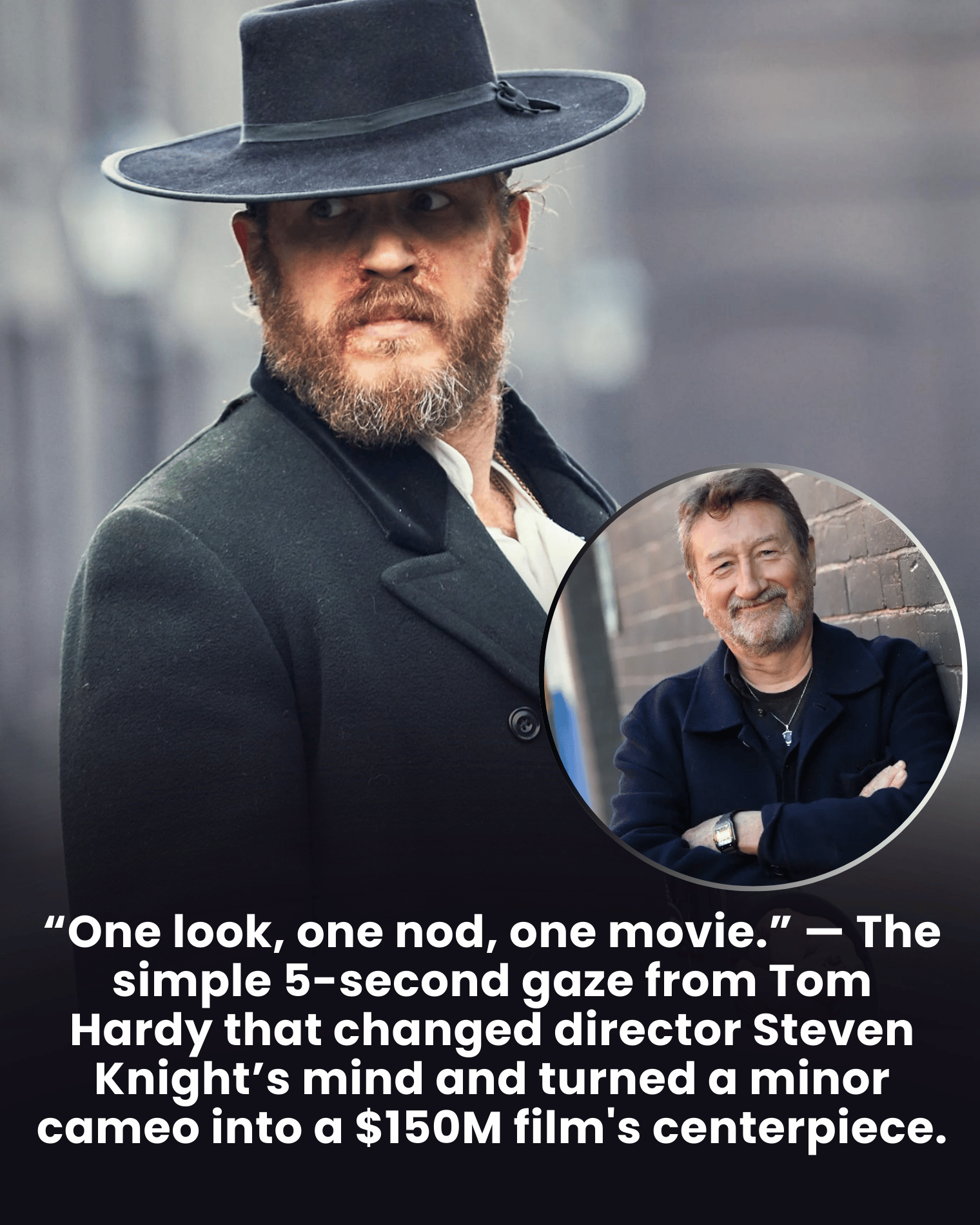
A role that was supposed to flicker briefly across the screen ended up becoming the emotional engine of a major film, all because of one silent moment between Tom Hardy and Cillian Murphy. According to the story, director Steven Knight had initially imagined Alfie Solomons as little more than a sharp cameo in the movie version, a symbolic passing of the torch rather than a central force in the narrative. On paper, the character was only meant to occupy around three minutes of screen time before the story moved on.
That plan collapsed the instant Hardy arrived for rehearsal.
Knight recalled that the actor did not launch into a dramatic speech or try to win the room over with an elaborate performance. Instead, he did something far simpler and far more unnerving. Hardy sat down, ignored the lines, and fixed Murphy with an intense, off-kilter stare that lasted only five seconds. There was no movement, no flourish, no need to explain what the character was thinking. But in that suspended silence, Knight suddenly saw a completely different movie taking shape.
It was not merely that Hardy looked dangerous. It was that his stillness seemed to bend the atmosphere around him. The rehearsal reportedly became charged with a kind of strange electricity, the sort of presence that cannot be manufactured through dialogue alone. For Knight, that realization hit immediately: a character with that much gravity could not be treated as a decorative cameo. He was too magnetic, too unpredictable, too alive.
Rather than sticking to the original outline, the director went back to his hotel and rewrote the final act through the night. What had been conceived as a brief passing moment was transformed into something far more consequential—a central duel between Hardy's Alfie Solomons and Murphy's Tommy Shelby. In that new vision, the film no longer belonged to one towering figure alone. It became a collision between two men whose histories, power, and psychological intensity demanded equal attention.
That kind of change says as much about Hardy's instinct as it does about Knight's willingness to trust it. Many actors can deliver a line well. Far fewer can alter the architecture of a story before speaking a single word. Hardy's gift in that rehearsal was not performance in the traditional sense. It was presence. He made the director feel that removing or minimizing Alfie would leave the film thinner, less volatile, less dangerous. Knight understood that immediately and responded the only way he could: by rebuilding the story around that spark.
In big-budget filmmaking, rewrites often come from studio notes, market logic, or test screenings. This was different. This was one actor walking into a room and, through one wordless exchange, forcing the film to reveal what it truly wanted to be. One look. One nod of understanding from the director. One movie fundamentally reshaped.
Some performances grow over weeks of shooting. Others announce themselves in seconds. If this account is true, Tom Hardy's Alfie Solomons did the latter—and turned a minor cameo into the beating heart of a $150 million cinematic showdown.