
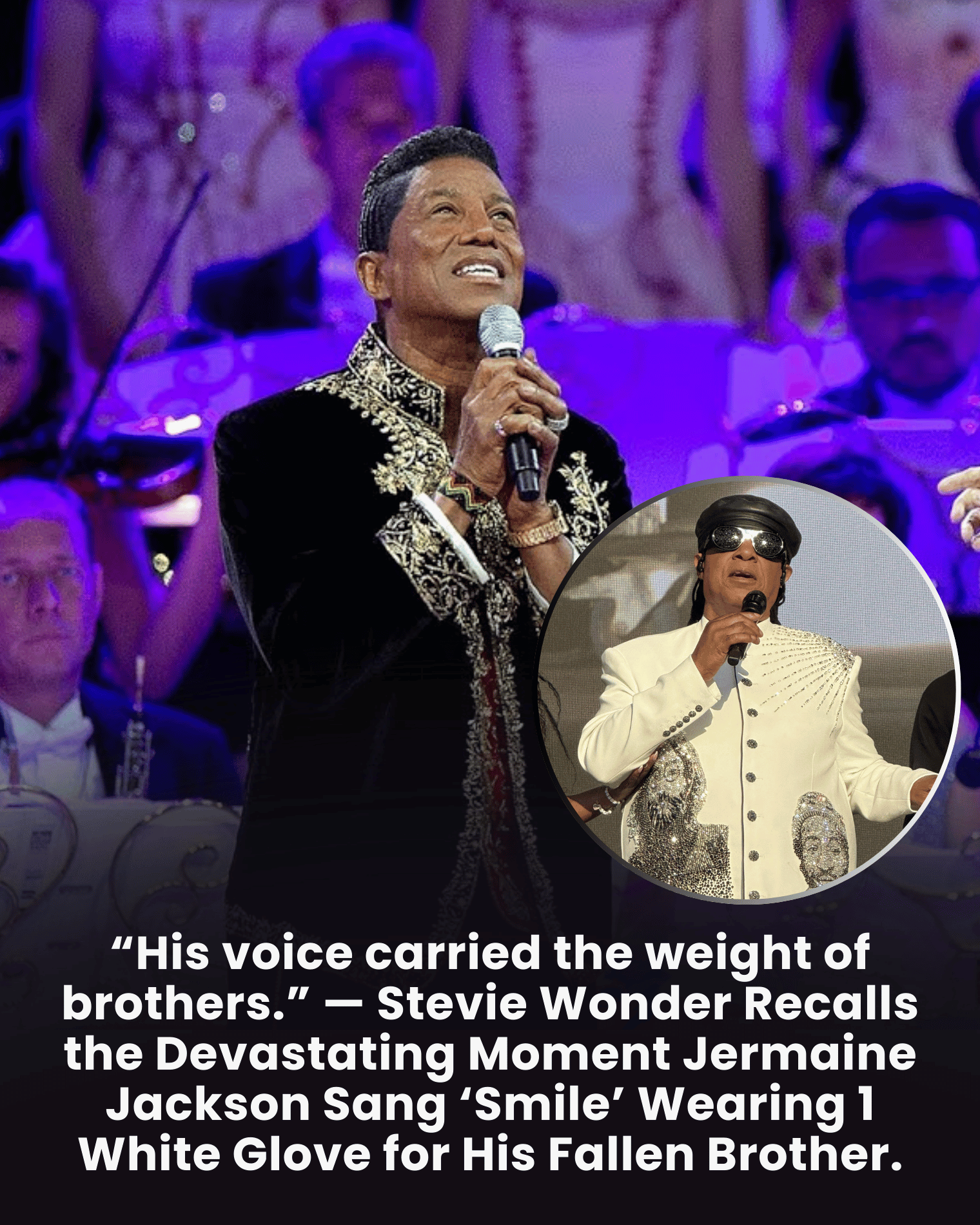
On July 7, 2009, the world gathered inside the Staples Center for one of the most emotional memorial services in music history: the public farewell to Michael Jackson. The event brought together family, friends, and global superstars to celebrate the life of the King of Pop. Among the many unforgettable tributes that day, one performance stood out as particularly heartbreaking—when Michael's brother, Jermaine Jackson, stepped forward to sing the timeless song Smile.
Watching the moment unfold backstage was another legend of music, Stevie Wonder. Wonder, who had known Michael since childhood and collaborated with him across decades, later reflected on the profound emotional impact of Jermaine's performance. The memorial itself was already overwhelming—thousands filled the arena, while millions more watched around the world—but when Jermaine approached the microphone, the atmosphere changed completely.
He was wearing a single sparkling white glove.
For fans, the symbol was unmistakable. Michael Jackson's signature glove had become one of the most iconic images in pop culture. Seeing Jermaine wear just one glove during the tribute instantly transformed the performance into something deeply personal. It was not merely a costume choice—it was a visual declaration of love and remembrance.
As the music began, Jermaine struggled to steady himself.
"Smile," originally composed by Charlie Chaplin for the 1936 film Modern Times, had long been one of Michael Jackson's favorite songs. Its gentle melody and bittersweet lyrics about finding hope in sadness made it a fitting yet devastating choice for the occasion. The song's message—urging listeners to keep smiling through heartbreak—felt almost unbearable in the context of that day.
Jermaine's voice trembled as he delivered the opening lines. Standing alone on the massive stage, he held the microphone tightly, fighting back tears while singing about perseverance and healing. For a moment, the enormous arena seemed to shrink into silence as every person present focused on the fragile performance unfolding before them.
Stevie Wonder later recalled how deeply the moment affected everyone in the building. The emotion wasn't theatrical—it was painfully real. Jermaine wasn't simply performing a tribute; he was mourning his brother in front of the entire world.
As the song continued, his voice grew stronger, soaring through the melody while his face reflected both grief and love. The white glove glittered beneath the stage lights, serving as a quiet but powerful reminder of the brother he had lost. By the time he reached the final lines, many in the audience—including celebrities, family members, and longtime collaborators—were openly weeping.
The performance quickly became one of the defining moments of the memorial. Amid speeches, video tributes, and musical performances, Jermaine's rendition of "Smile" stood apart because of its raw honesty. There was no spectacle, no elaborate staging—just a brother honoring another brother through music.
For Stevie Wonder and many others who witnessed it, the moment captured something deeper than fame or legacy. It revealed the profound bond between siblings who had spent their entire lives together in music.
In that quiet, emotional performance, Jermaine Jackson didn't just sing a song. He carried the weight of family, grief, and love in every note—offering the world a farewell that words alone could never express.